
Overview:
The Shalimar Gardens , sometimes spelt Shalamar Gardens, is a complex located in Lahore, capital of the Pakistani province of Punjab. The gardens date from the period when the Mughal Empire was at its artistic and aesthetic zenith,] and are now one of Pakistan’s most popular tourist destinations.
The Shalimar Gardens were laid out as a Persian paradise garden intended to create a representation of an earthly utopia in which humans co-exist in perfect harmony with all elements of nature. Construction of the gardens began in 1641 during the reign of Emperor Shah Jahan and was completed in 1642. In 1981 the Shalimar Gardens were inscribed as a UNESCO World Heritage Site as they embody Mughal garden design at the apogee of its development
Location:
The Shalimar Gardens are located near Baghbanpura along Grand Trunk Road some 5 kilometers northeast of Lahore’s Walled City.
Background:
Lahore’s Shalimar Gardens were built by the Mughal royal family primarily as a venue for them to entertain guests,[4] though a large portion was open to the general public. The gardens’ design was influenced by the older Shalimar Gardens in Kashmir that were built by Shah Jahan’s father, Emperor Jahangir . Unlike the gardens in Kashmir which relied on naturally sloping landscapes, the waterworks in Lahore required extensive engineering to create artificial cascades and terraces
The Shalimar Gardens were designed as a Persian-style Charbagh “Paradise garden” – a microcosm of an earthly utopia. Though the word Bagh is translated simply as “garden,” bagh represents a harmonious existence between humans and nature, and represents a poetic connection between heaven and earth. All natural elements of the bagh are appreciated – including the sun, moon, and air. Muhammad Saleh Kamboh, historian to Shah Jahan, reported that the gardens of Kashmir inspired the design for the Shalimar Garden in Lahore, and that a wide variety of trees and flowers grew together in the garden.
The site was chosen for its stable water supply.[ The project was managed by Khalilullah Khan, a noble of Shah Jahan’s court, in cooperation with and Mulla Alaul Maulk Tuni. Ali Mardan Khan was responsible for most of the construction, and had a 100-mile-long canal built to bring water from the foothills of Kashmir to the site.
The site of the Shalimar Gardens originally belonged to the Arain Mian Family Baghbanpura. Mian Muhammad Yusuf, then the head of the Arain Mian family, ceded the site of Ishaq Pura to the Emperor Shah Jahan in order for the gardens to be built. In return, Shah Jahan granted the Arain Mian family governance of the Shalimar Gardens, and the gardens remained under their custodianship for over 350 years.
History:
Construction of the gardens began on 12 June 1641, and took 18 months to complete. During the Sikh era, much of the garden’s marble was pillaged and used to decorated the Golden Temple in Amritsar.[ The Shalimar Gardens were plundered of much of its marble which was transported to decorate the Ram Bagh Palace in nearby Amritsar, while the gardens’ costly agate gate was stripped and sold by Lehna Singh Majithia.
In 1962, the Shalimar Gardens were nationalised by General Ayub khan because leading Arain Mian family members had opposed his imposition of martial law in Pakistan.[citation needed]
The annual Mela Chiraghan festival used to take place in the gardens until General Ayub Khan forbade it in 1958.
Design and layout:
Mughal Gardens were based upom Timurid gardens built in Central Asia and Iran between the 14th and 16th century.[ A high brick wall richly decorated with intricate fretwork encloses the site in order to allow for the creation of a Charbagh paradise garden – a microcosm of an earthly utopia.
The Shalimar Gardens are laid out in the form of form of a rectangle aligned along a north-south axis, and measure 658 metre by 258 metres, and cover an area of 16 hectares. Each terrace level 4–5 metres (13-15 feet) higher than the previous level.
The uppermost terrace of the gardens is named Bagh-e-Farah Baksh, literally meaning Bestower of Pleasure. The second that third terraces are jointly known as the Bagh-e-Faiz Baksh, meaning Bestower of Goodness. The first and third terraces are both shaped as squares, while the second terrace is a narrow rectangle.
Shalimar’s main entrance was onto the lower-most terrace, which was open to noblemen, and occasionally to the public The middle terrace was the Emperor’s Garden, and contained the most elaborate waterworks of any Mughal garden. The highest terrace was reserved for the Emperor’s harem.
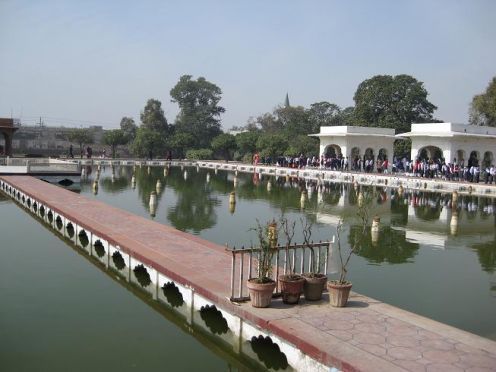
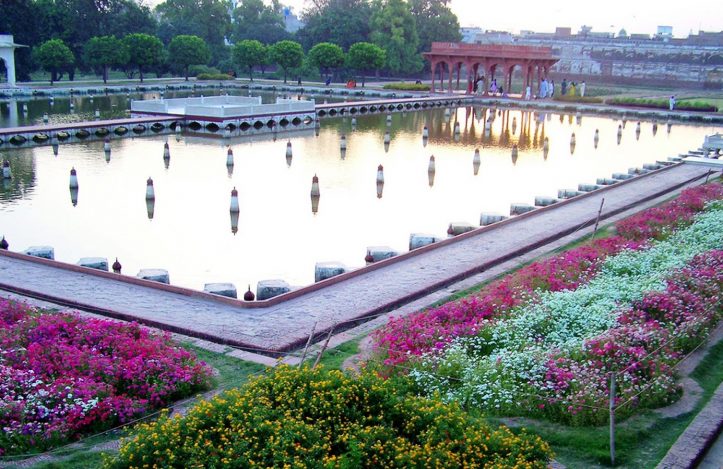
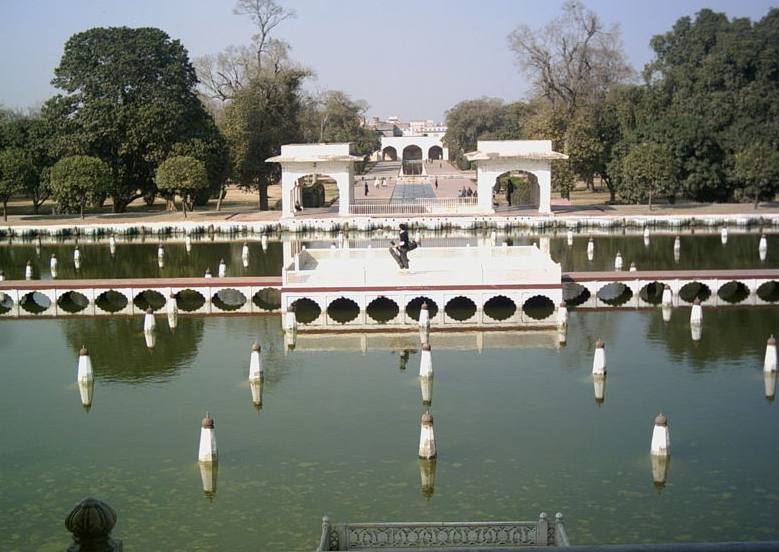
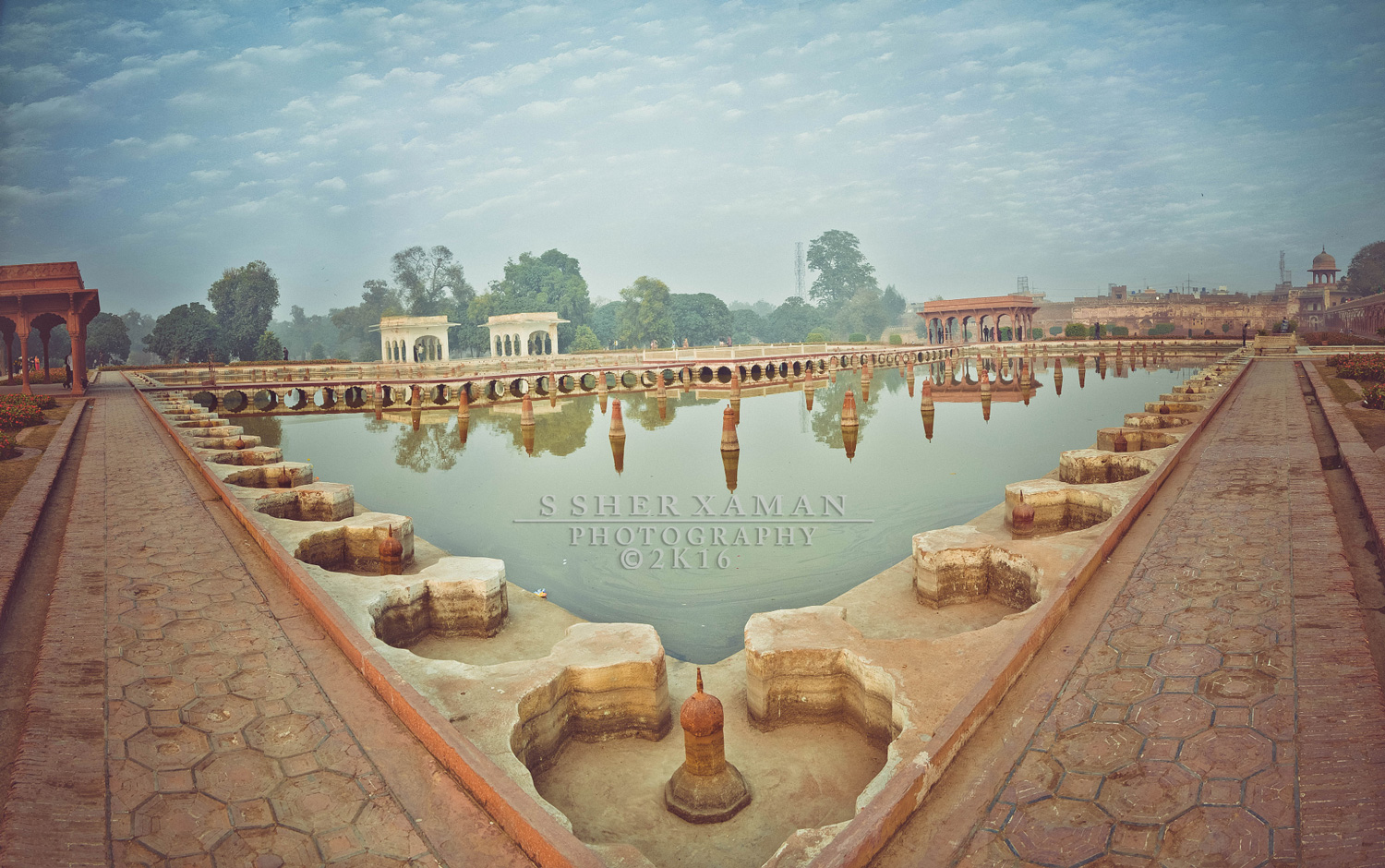
The square shaped terraces were both divided into four equivalent smaller squares by long fountains flanked by brick khayaban walkways designed to be elevated in order to provide better views of the garden.Cascades were made to flow over a marble paths in what are known as chadors, or “curtains” into the middle terrace. Water collected into a large pool, known as a haūz, over which a seating pavilion was made
Images:
Note:
Shalimar garden is a beautiful historical place for visiters. If you come to lahore must visit this beautiful place . there is some beautiful view , sight for capture the nature , take images : Thanks
 Historical places in Pakistan