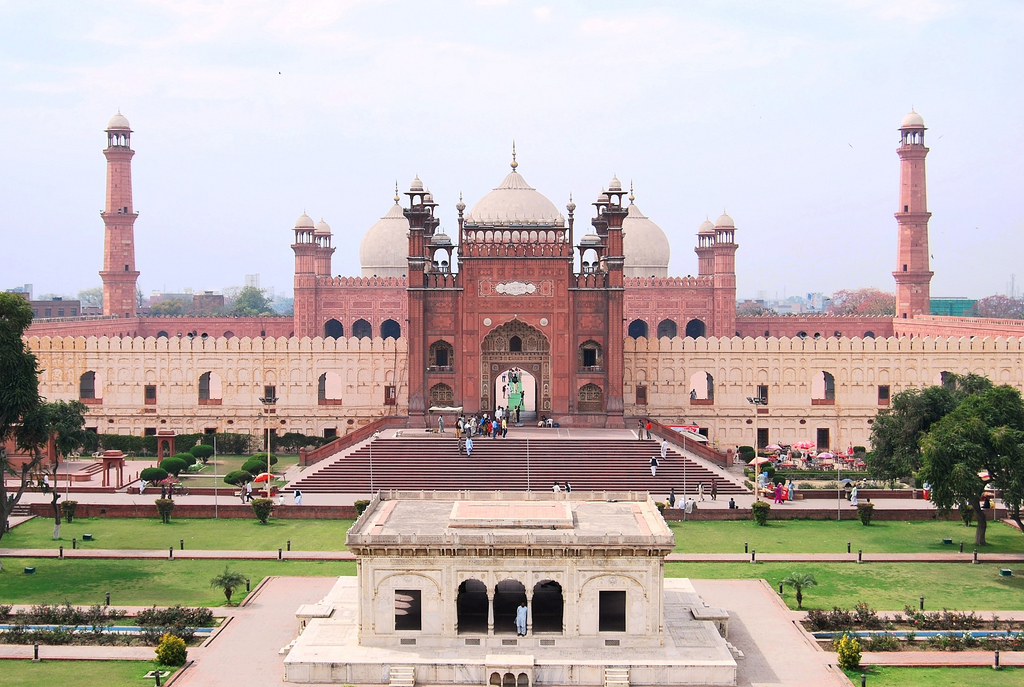
Overview:
it is one of the historical place in Pakistan.The Badshahi Mosque(بادشاھی مسجد), or the ‘Emperor’s Mosque’, was built in 1673 by the Mughal Emperor Aurangzeb in Lahore, Pakistan. It is one of the city’s best known landmarks, and a major tourist attraction epitomising the beauty and grandeur of the Mughal era.
Badshahi Mosque was commissioned by Emperor Aurangzeb in 1671, with construction of the mosque lasting for two years until 1673. The mosque is an important example of Mughal architecture, with an exterior that is decorated with carved red sandstone with marble inlay. It remains the largest and most recent of the grand imperial mosques of the Mughal-era, and is the second-largest mosque in Pakistan. After the fall of the Mughal Empire, the mosque was used as a garrison by the Sikh Empire and the British Empire, and is now one of Pakistan’s most iconic sights.
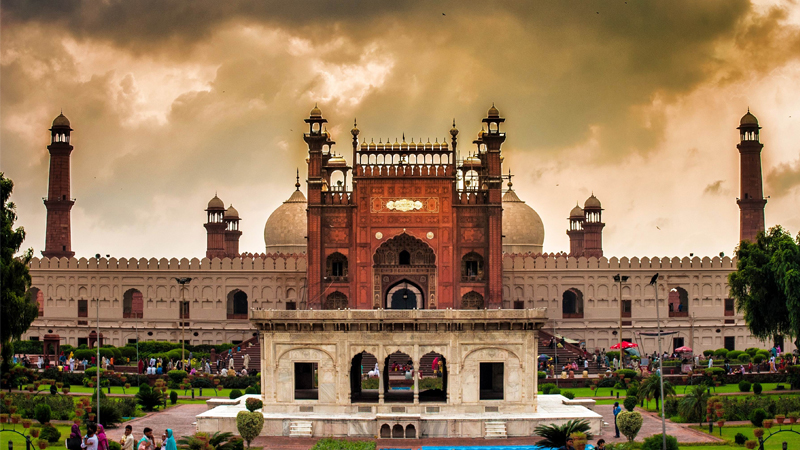
Location:
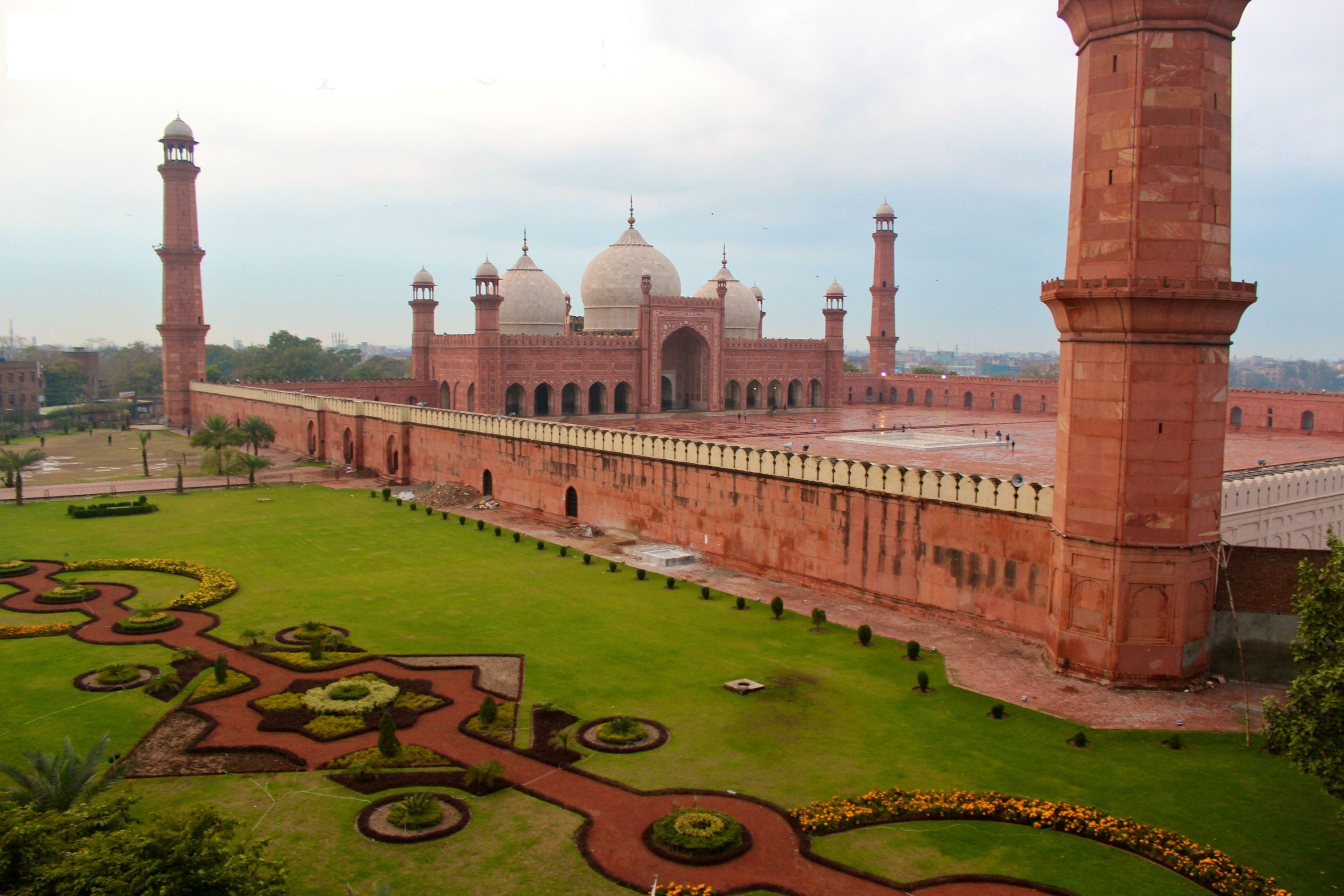
The mosque is located adjacent to the Walled City of Lahore, Pakistan. The entrance to the mosque lies on the western side of the rectangular Hazuri Bagh, and faces the famous Alamgiri Gate of the Lahore Fort, which is located on the eastern side of the Hazuri Bagh. The mosque is also located next to the Roshnai Gate, one of the original thirteen gates of Lahore, which is located to the southern side of the Hazuri Bagh.[
Near the entrance of the mosque lies the Tomb of Muhammad Iqbal, a poet widely revered in Pakistan as the founder of the Pakistan Movement which led to the creation of Pakistan as a homeland for the Muslims of British India.[ Also located near the mosque’s entrance is the tomb of Sir Sikandar Hayat Khan, who is credited for playing a major role in preservation and restoration of the mosqu
courtyard:
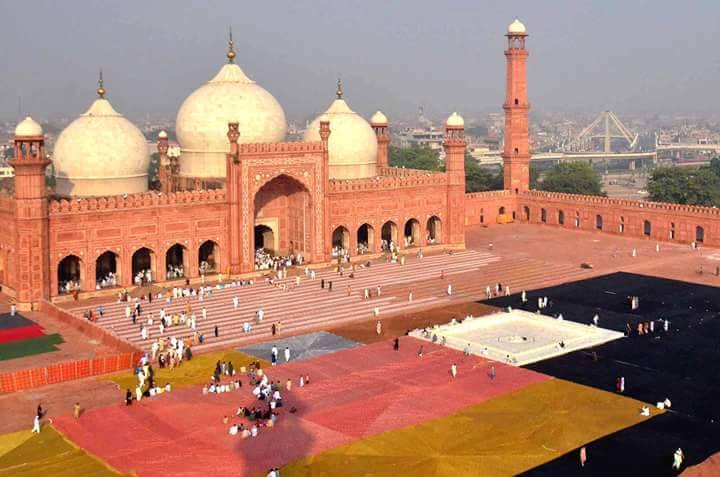
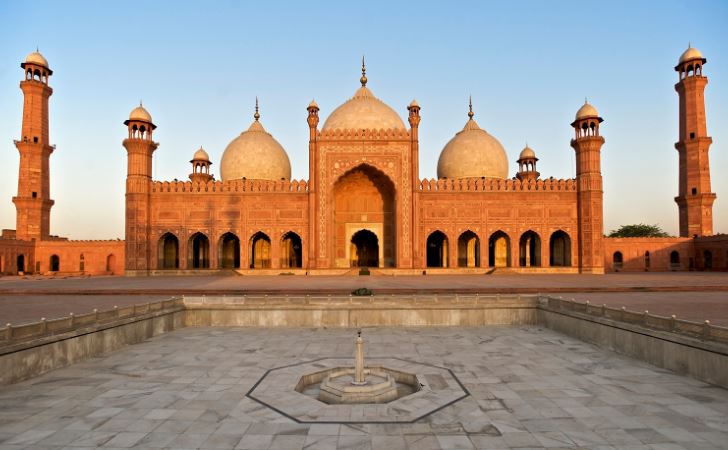
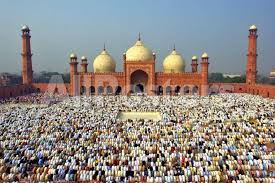
After passing through the massive gate, an expansive sandstone paved courtyard spreads over an area of 276,000 square feet, and which can accommodate 100,000 worshipers when functioning as an Idgah. The courtyard is enclosed by single-aisled arcades.
pryar hall
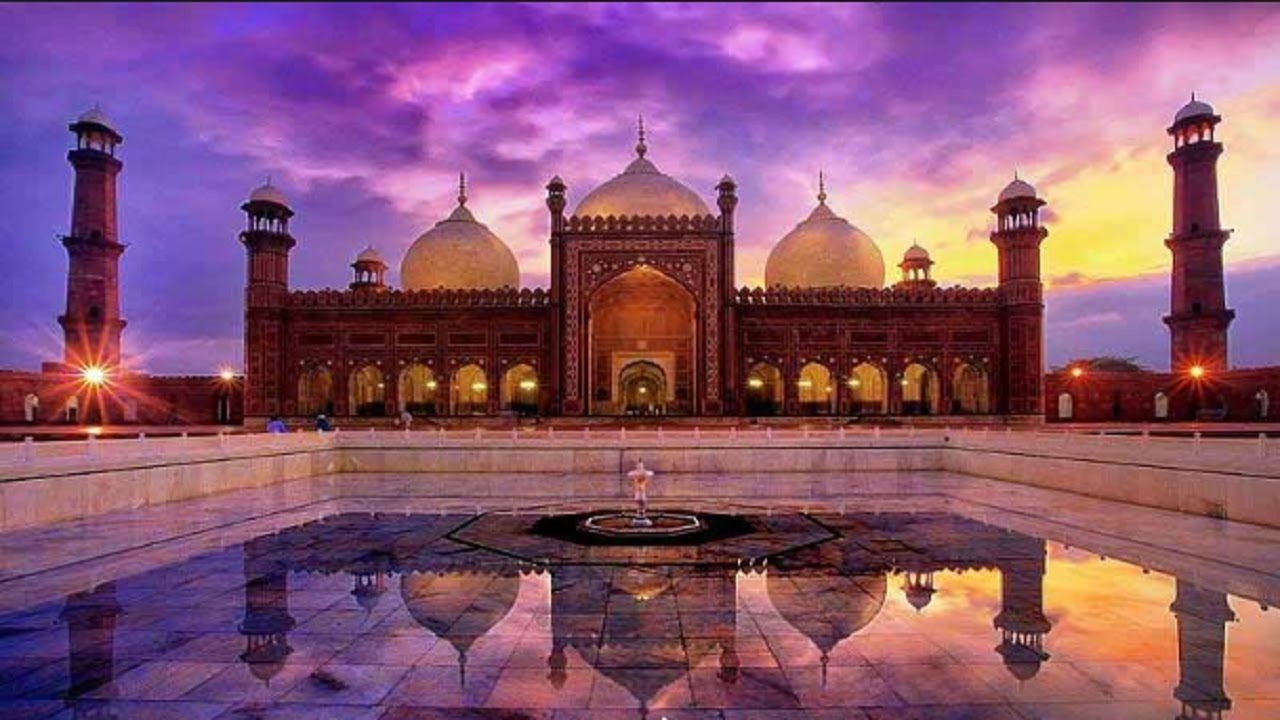
The main edifice at the site was also built from red sandstone, and is decorated with white marble inlay. The prayer chamber has a central arched niche with five niches flanking it which are about one third the size of the central niche. The mosque has three marble domes, the largest of which is located in the centre of the mosque, and which is flanked by two smaller domes.[
Both the interior and exterior of the mosque are decorated with elaborate white marble carved with a floral design common to Mughal art. The carvings at Badshahi mosque are considered to be uniquely fine and unsurpassed works of Mughal architecture. The chambers on each side of the main chamber contains rooms which were used for religious instruction. The mosque can accommodate 10,000 worshippers in the prayer hall.
Minarets:
At each of the four corners of the mosque, there are octagonal, three storey minarets made of red sandstone that are 196 feet (60 m) tall, with an outer circumference of 67 feet and the inner circumference is eight and half feet. Each minaret is topped by a marble canopy. The main building of the mosque also features an additional four smaller minarets at each corner of the building.
Images:
Note:
when you come to Lahore. Must visit this beautiful place .
 Historical places in Pakistan